

When Sparks Became Understanding
From curious shocks to the command of unseen currents that reshaped science, cities, and imagination alike
Ancient marvels and the touch of amber
Long before laboratories, people noticed that rubbed amber could pull dust or straw toward it, a quiet trick recorded by Greek thinkers who used the word elektron for the resin. In temples of Egypt and in scrolls of early scholars, the phenomenon sat between superstition and wonder, a sign that invisible forces moved through the world even if names and measures were still unborn.
Experiments of glass, silk, and curiosity
By the seventeenth century, glass spheres turned by hand or belt generated static charge that could leap as a faint spark. Experimenters across Europe built Leyden jars to store this mysterious energy, feeling its sting in fingers and seeing its glow in the dark. They argued whether it flowed like water, gathered like vapor, or arose from friction itself, and in that debate science began to replace spectacle with theory.
Franklin and the thread of lightning
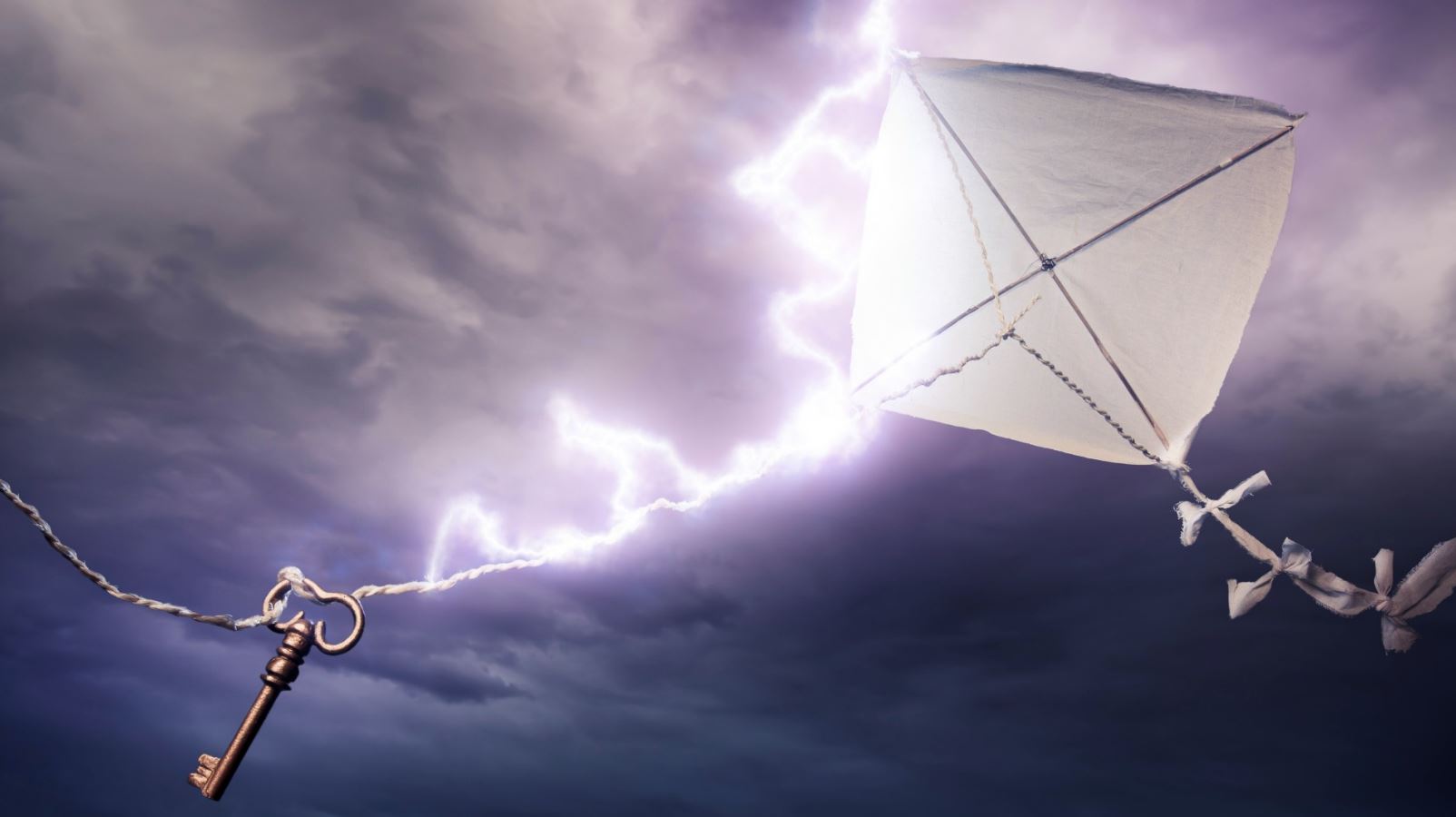
Across the Atlantic, a printer turned philosopher studied storms as if they were extensions of the laboratory. He sent a kite with a metal key into a charged sky and found that lightning and the spark from a jar shared the same nature. The discovery carried danger yet also offered control, leading to lightning rods on rooftops and a new respect for the union between boldness and patience in inquiry.
Volta and the birth of continuous current
In Italy, Alessandro Volta pursued a puzzle left by Galvani’s twitching frog legs. He built a column of alternating metals separated by brine-soaked cloth and found that it produced a steady flow instead of a brief discharge. The voltaic pile transformed electricity from a curiosity into a tool, allowing wires to carry energy long enough for observation, calculation, and eventually invention.
The spark reveals its chemistry
With current now steady, Humphry Davy used it to split compounds into elements and to isolate substances never seen before. His assistants inhaled fumes and recorded strange lights, turning chemistry into a dance of ions that explained corrosion, flame, and the strange glow inside glass tubes. Electric force proved to be both destroyer and builder at the smallest scales of matter known at the time.
Electromagnetism and the unity of forces
Hans Christian Oersted noticed that a compass needle trembled when near a live wire, and from that moment the link between current and magnetism was undeniable. Ampere described the laws that governed the effect, while Faraday built coils that could induce motion or produce current from moving fields. Their work united two mysteries into one discipline, giving birth to motors, dynamos, and the idea that space itself held energy in loops unseen by eyes.
Arcs, filaments, and the conquest of night
Inventors shaped electricity into light through sparks leaping between carbon tips and through heated wires inside evacuated bulbs. Streets that once relied on gas lamps began to shimmer with white radiance. Factories extended their hours, and households dreamed of illumination without flame or soot, marking a cultural shift where darkness no longer dictated the rhythm of life.
The rivalry of current and the march of networks
When the nineteenth century matured, Edison championed direct current while Tesla and Westinghouse advanced alternating systems that could travel farther with less loss. The contest played out in patents, publicity, and demonstrations that startled crowds. Eventually, the alternating method prevailed, stringing copper lines across continents and turning generators into the beating hearts of modern cities.
Communication through the pulse of electrons
Telegraphs transformed wires into messengers that carried dots and dashes faster than any horse or ship. Soon, telephones converted voice into vibration, while radio sent patterns through air itself. Each new medium drew from the same principle, that moving charges could weave information into the fabric of space, shrinking distance and altering the shape of thought and diplomacy.
Power plants and the architecture of dependence
As industries expanded, waterfalls, coal, and steam fed turbines that spun enormous magnets. Power grids connected towns and regions until the flick of a switch in one place depended on reservoirs, mines, and labor in another. Electricity ceased to be an experiment and became an environment, invisible yet indispensable, a web that sustained every clock, factory, and kitchen alike.
Electricity in medicine and the pulse within flesh
Scientists applied current to nerves to study motion and sensation, discovering that muscles respond to measured shocks. Electrotherapy entered hospitals with devices that promised relief from pain or paralysis. Later, electrocardiographs traced the rhythm of hearts, while defibrillators restored it. The same force that split atoms could also sustain life when guided with care and precision.
From laboratory curiosity to household rhythm
By the early twentieth century, electric irons, radios, and refrigerators entered homes as symbols of progress. Advertising portrayed current as a gentle servant that worked without smoke or fatigue. Yet every convenience required an infrastructure of dams, cables, and labor unseen by users, proving that mastery of nature always carries the price of stewardship.
Subatomic understanding and the field as reality
Physicists moved from wires and sparks to equations that described electrons as waves and probabilities. Quantum theory redefined current as the movement of charge carriers through lattices of atoms, and the concept of the field replaced the older notion of invisible fluid. Electricity became not just a practical power but a key to understanding matter itself.
Semiconductors and the silent revolution of logic
When silicon wafers replaced vacuum tubes, electricity began to think in patterns. Tiny transistors switched on and off in fractions of seconds, birthing computers that calculated, simulated, and communicated. The digital world emerged from the same forces that once shocked the fingertips of early experimenters, now disciplined into circuits smaller than dust yet capable of shaping nations.
Wires yield to waves
As frequencies climbed and modulation improved, signals traveled without copper, filling air with invisible traffic. Electricity leapt from towers and satellites to phones, computers, and sensors, carrying voices and images across oceans. The modern sky hums with electromagnetic conversation, a continuation of Franklin’s kite transformed into billions of private storms of data.
Energy, environment, and the return to balance
The same grids that lifted living standards also strained landscapes and climates. Scientists and engineers now chase cleaner sources, turning to sun and wind that convert natural motion and light into charge. Storage systems, smart meters, and superconductors attempt to make abundance sustainable, proving that progress demands renewal as much as discovery.
Electric art and cultural imagination
Artists use light installations to sculpt space, musicians play instruments powered by voltage, and filmmakers frame cities glowing with circuitry. Electricity has become metaphor as much as medium, symbolizing creativity, danger, and connection. The pulse that once frightened observers now defines the modern aesthetic of motion and brilliance.
Everyday physics hidden in plain sight
Switches, screens, and chargers represent centuries of observation layered into design. Behind each appliance lie laws of induction, resistance, and potential difference taught in classrooms and coded into chips. The comfort of pressing a button rests on the disciplined understanding of currents that once escaped comprehension entirely.
Education and the inheritance of curiosity
Schools and museums spark fascination with simple circuits and magnets, repeating experiments once performed by pioneers. The continuity between childlike wonder and academic rigor ensures that discovery remains a living act, not a closed chapter. Each new learner touching a battery and bulb repeats humanity’s long awakening to the behavior of charge.
Frontiers of plasma and lightning in laboratories
Modern research stretches beyond solids and wires into plasma physics, where electric and magnetic fields sculpt matter at stellar temperatures. Scientists mimic lightning inside reactors and study auroras with satellites, bridging natural spectacle with applied science. The more we control electricity, the more we appreciate its cosmic scale and unpredictability.
Global inequities and the unfinished mission
Millions still live beyond the reach of reliable power, and their nights resemble centuries past while cities glitter nearby. Projects to expand access join technology with policy, carrying wires through deserts and islands. The dream that every mind should have light by which to read remains both achievable and urgent.
The silent current that shaped modern destiny
From amber in ancient hands to microchips in orbit, electricity charts the story of curiosity turned into civilization. It connects stars and circuits, hearts and homes, proving that knowledge of invisible forces can rewrite daily life. The discovery did not end with a single spark, it continues wherever humans seek to understand and refine the energy that binds their world together.