

Voices That Learned to Rule Themselves
Ancient assemblies and restless citizens carved the first paths toward shared power and civic equality
Before the voice of the people
In the earliest kingdoms, power flowed downward from the few to the many. Pharaohs, emperors, and warlords ruled by decree, their commands reinforced by myth, wealth, and the sword. The governed obeyed not because they chose to, but because tradition and fear made obedience a habit. Tribes sometimes held councils, yet these gatherings often guided rather than governed. The idea that ordinary people might decide the fate of the whole community was unthinkable. Hierarchy seemed natural, and to question it meant rebellion against the structure of the cosmos itself. The seeds of democracy existed only as whispers in the friction between ruler and ruled, waiting for the right soil of culture and necessity to sprout.
The Athenian experiment
In the fifth century before the common era, the city of Athens began a bold departure from monarchy and oligarchy. It was a modest polis, but its ambitions were immense. Citizens gathered in the assembly known as the Ecclesia, where every eligible man could speak and vote on laws, wars, and alliances. Leadership rotated through lotteries rather than inheritance, seeking fairness through randomness. The Council of Five Hundred prepared agendas, while juries of ordinary men judged without professional judges. These mechanisms did not appear overnight, but through decades of reform and upheaval. Solon balanced classes through legal rights, Cleisthenes broke old clan loyalties by redrawing districts, and Pericles elevated participation into a civic duty. Democracy was born not as an ideal but as a practice, tested daily in the heat of debate and ambition.
Exclusion within equality
The democracy of Athens celebrated freedom while denying it to many. Women, slaves, and foreigners remained outside the political sphere, treated as dependents or property. The polis defined citizenship narrowly, equating equality with membership in a privileged class of men. Yet within its limits, the system created a model of governance that valued persuasion over inheritance. Citizens learned rhetoric, philosophy, and strategy, understanding that power depended on reason as much as on arms. The flaws of Athenian democracy are clear to modern eyes, but its courage to let ordinary people deliberate on public matters became a precedent no empire could erase.
The shadow of empire and the cost of freedom
Democracy thrived in the tension between independence and empire. Athens defended itself against Persia, then turned its leadership of the Delian League into domination of its allies. Tribute funded monuments and fleets, yet also resentment. The Peloponnesian War revealed democracy’s vulnerability to pride and demagoguery. Orators like Alcibiades and Cleon swayed crowds with passion rather than prudence, proving that freedom of speech can both enlighten and destroy. When Athens fell to Sparta, critics declared democracy unstable, an indulgence too dangerous for nations that sought order. The lesson would echo through centuries of philosophers and rulers who debated whether people could truly be trusted with their own power.
Philosophers and the distrust of the many
Plato, a witness to Athens’ decline, mistrusted democracy as a government of emotion rather than wisdom. He saw the mob’s fickleness as the ruin of justice, arguing for rule by philosophers trained in truth. His student Aristotle offered a more balanced view, seeing democracy as one of several constitutional forms that could succeed if guided by virtue and law. Both men shaped later political thought by forcing the question of whether collective judgment can surpass individual knowledge. Their writings preserved the debate between equality and excellence, a conversation that still defines the boundaries of modern governance.
Echoes in the Roman Republic
Centuries after Athens, Rome developed its own version of shared governance. The Republic mixed monarchy, aristocracy, and democracy within a single system. Two consuls held executive power, the Senate represented noble families, and popular assemblies gave voice to citizens through votes weighted by class. Tribunes protected the rights of the lower orders by vetoing harmful laws. The structure balanced ambition with restraint, relying on virtue rather than blind trust. Over time, however, inequality eroded cooperation. Military leaders gained personal loyalty from their soldiers, and civil wars replaced elections. The Republic fell to empire, yet its memory endured as proof that law could rule even the powerful. When later generations revived the word “republic,” they echoed Rome’s lost ideal of civic responsibility.
Democracy in the shadow of kings
After the fall of ancient republics, monarchy reasserted dominance across continents. Feudal systems bound peasants to lords, while divine right justified authority as heaven’s will. Yet beneath the surface, towns grew wealthier, guilds formed councils, and merchants demanded charters of rights. In medieval Europe, parliaments began as advisory bodies but slowly claimed the authority to approve taxes. The Magna Carta of twelve fifteen did not create democracy, but it forced the English king to accept limits on power. Representation emerged as a practical tool for negotiation, a means to balance royal ambition with collective interest. The slow evolution of assemblies and town meetings rekindled an old truth, that governance depends on consent even when that consent is reluctant.
The philosophers of liberty
The Enlightenment transformed scattered traditions into coherent philosophy. Thinkers like John Locke, Montesquieu, and Rousseau redefined authority as a contract rather than a divine gift. Locke argued that governments exist to protect life, liberty, and property, and that people have the right to withdraw consent from tyranny. Montesquieu studied separation of powers as a safeguard against corruption, while Rousseau envisioned a general will expressed through direct participation. These ideas did not simply praise freedom; they sought systems that could preserve it. The printing press amplified their reach, spreading essays and manifestos that turned philosophy into revolution.
Revolution and the rebirth of the citizen
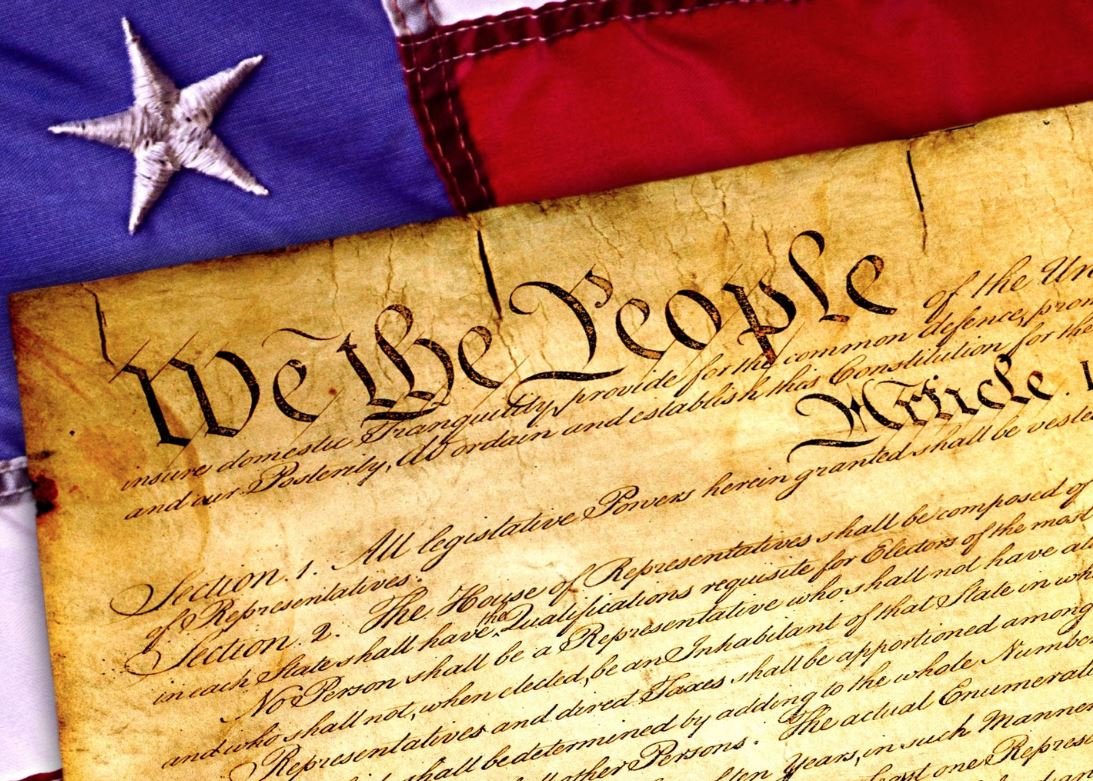
In the late eighteenth century, democratic ideals ignited revolutions. In America, colonists claimed independence by asserting that all men are created equal. Their experiment replaced monarchy with a constitution that balanced representation and rights, though it preserved inequality in practice. In France, crowds stormed Bastille and declared sovereignty of the nation over the king. Both revolutions faced violence, compromise, and restoration, yet they proved that democracy could exist beyond small city states. The citizen became a political identity rather than a geographic one. Across oceans, oppressed peoples found in these documents a vocabulary of freedom that transcended empire.
Democracy under fire and reform
As industrialization transformed economies, new movements demanded inclusion. Workers, women, and minorities challenged the narrow definition of citizenship inherited from earlier centuries. Suffrage campaigns expanded the electorate, labor unions sought rights to organize, and education spread literacy essential to informed participation. Democracy evolved from a privilege into a principle. Wars tested its resilience, and propaganda threatened its clarity, but reforms continued. The idea of one person, one vote became both an aspiration and a measure of justice. In each era, democracy reinvented itself to meet the demands of those it had once ignored.
Global adoption and local adaptation
The twentieth century witnessed democracy’s spread across continents, often through struggle. Colonized nations demanded self determination, linking independence with elections. Some borrowed Western constitutions, while others blended indigenous traditions of council and consensus. Not all transitions succeeded, and many democracies fell to dictatorship or civil unrest. Yet the principle of participation persisted. People learned that democracy is not a destination but a process, sustained by vigilance and shared belief in the worth of every voice. Its strength lies not in uniformity but in the ability to absorb diversity without losing coherence.
Technology and the transformation of participation
Modern communication reshaped the relationship between citizen and state. Radio, television, and later the internet accelerated the exchange of information, giving voters immediate access to events once distant. Social media created arenas where every opinion could find an audience, but also where misinformation could spread unchecked. Digital tools offered transparency and activism, yet they also magnified division. The new agora lives on screens, its debates as passionate and chaotic as those of ancient Athens. Democracy continues to depend on literacy, now digital as well as civic, reminding societies that information without discernment can erode the foundation it was meant to strengthen.
The fragility of freedom
History reveals that democracy survives through habits rather than declarations. Constitutions can guarantee rights, but only citizens can practice them. Corruption, apathy, and fear remain its most persistent adversaries. Each generation must rediscover why compromise is strength and why dissent is not betrayal. The failure of one democracy does not disprove the idea, just as the success of another does not secure permanence. The experiment that began in ancient squares still depends on courage—the courage to listen, to argue, and to lose gracefully. Without that discipline, liberty becomes noise without harmony.
Democracy’s silent architects
Behind every public figure stand countless invisible builders: teachers who nurture reasoning, journalists who chase truth, judges who guard fairness, and citizens who vote not for profit but for principle. Their work lacks spectacle yet ensures continuity. When these foundations weaken, populists and autocrats find easy entry. True democracy is maintained less by leaders than by the daily discipline of ordinary people. It is not the shouting of crowds that preserves freedom, but the quiet insistence of conscience that refuses to be silenced.
Culture, empathy, and the language of equality
For democracy to endure, it must be more than structure; it must live in culture. Music, literature, and art teach empathy by showing lives beyond our own. Education shapes citizens who question authority without rejecting it entirely. The ballot is only one tool among many, but empathy is the spirit that guides its use. Without understanding, voting becomes arithmetic instead of dialogue. Societies that neglect imagination risk losing the moral vocabulary that makes equality meaningful. The arts remain democracy’s hidden parliament, where hearts deliberate before hands vote.
The unfinished journey
Even today, democracy struggles with paradoxes. Populism can rise within it, wealth can distort representation, and technology can isolate individuals within echo chambers. Yet its endurance lies in its openness to correction. Systems that permit self criticism renew themselves, while those that silence dissent decay from within. The story of democracy is unfinished because it is written collectively. Every protest, election, and conversation adds a line to its evolving script. The question is never whether democracy is perfect, but whether people still believe they can improve it.
The circle returns to the people
From the hills of Athens to the halls of modern parliaments, democracy remains a fragile miracle built on trust. It began as an experiment in listening and continues as an act of faith in dialogue. Its essence is not voting alone but believing that no voice is beyond consideration. The birth of democracy was not a single event but a recurring awakening, each time societies remember that power belongs to all who dare to share it. Its heartbeat echoes whenever citizens gather to decide together, proving that freedom survives wherever conversation refuses to die.