
From Herbs to Heartbeats
A long journey in which curiosity, care, and careful record turned suffering into science and healing into shared knowledge
Firelight remedies and the first healers
Before writing, people learned by watching seasons and wounds, they wrapped leaves on cuts, brewed bark in water, and spoke to spirits for comfort, and though explanations varied by valley and tongue, a memory of what soothed and what harmed began to pass from one generation to the next.
Clay tablets and river doctors
In Mesopotamian cities, healers listed symptoms on clay and tied treatment to prayer and plant lore, temples and houses carried shelves of remedies, and the first attempts to classify illness by pattern rather than by legend appeared beside riverbanks where trade brought herbs from far fields.
Papyrus scrolls and careful hands
Egyptian practitioners recorded fractures, dislocations, and poultices with remarkable attention, they splinted limbs with linen and wood, cleaned wounds with wine and oils, and judged outcomes with a sense that observation can guide choice even when mystery remains.
Ayurvedic balance and classical surgeons of India
Texts described the body as a field of forces that must remain in balance, physicians advised diet, rest, and herbal mixtures for the seasons, and surgical pioneers crafted instruments for rhinoplasty and cataract work, pairing philosophy with practical skill learned at the bedside.
Huangdi traditions and the rhythm of qi
Chinese scholars linked pulse, breath, and organ systems to cycles in nature, they mapped points for needles and moxibustion, compiled materia medica with thousands of entries, and taught that prevention through harmony of diet and habit has value equal to cures.
Greek inquiry and the turn toward natural causes
In the Aegean world, physicians argued that disease arises from processes in the body rather than from wrath alone, case notes described fevers and seasons, and the clinic became a place where reasoned debate might replace ritual as the guide for treatment.
Alexandrian anatomy and the courage to look within
Scholars at the great city dissected animals and described nerves, vessels, and organs with care, they wrote atlases that later generations would copy and dispute, and the habit of drawing what one sees rather than what one expects began to take deep root.
Roman baths, military hospitals, and public health
Engineers brought clean water to towns through aqueducts, soldiers rested in organized hospitals with triage and diets, and administrators learned that sanitation and steady food supply protect populations more reliably than charms.
Healers of the House of Wisdom
Across the lands of Islam, translators gathered Greek and Indian texts, clinicians compared fevers and rashes in bustling hospitals, pharmacies standardized measures, and scholars wrote manuals that framed disease as a pattern to be studied and shared across languages.
Monastic infirmaries and quiet continuity
In medieval Europe, monks and nuns tended travelers and the poor, copied herbals, ran gardens of simples, and preserved fragments of classical learning, while cities experimented with pest houses and quarantine to stem the spread of deadly contagion.
University medicine and scholastic debate
Medical schools in new towns taught anatomy and humors beside logic and law, students defended theses, professors lectured from authoritative texts, and the tension between inherited theory and bedside observation sharpened minds for the changes to come.
Renaissance anatomy and the language of drawing
Artists and surgeons opened the human body to careful study, engraved plates revealed muscles and vessels with accuracy, and the classroom began to honor the cadaver as a teacher, a shift that placed sight and dissection at the center of understanding.
Microscopes and the discovery of the unseen
Simple lenses revealed tiny life in drops of water, capillaries connected arteries and veins, and naturalists realized that tissues form from cells, a revelation that redefined disease as change in structure rather than imbalance alone.
Circulation, chemistry, and quantifiable life
Physicians measured pulse, pressure, and respiration, chemists analyzed gases and acids in the laboratory, and the body slowly transformed from a set of temperaments into a system of pumps, filters, and signals that could be counted and compared.
Inoculation and the new idea of prevention
Communities learned that exposure to a weakened form of smallpox can train the body to resist, debates over risk and ethics followed, and public campaigns began to treat disease not only as a fate to endure but as a threat that policy can reduce.
Hospitals as engines of data
Urban institutions admitted thousands of patients, recorded symptoms, and tracked outcomes, charts replaced memory as the trusted archive, and administrators recognized that cleanliness, ventilation, and diet change mortality even before specific cures are known.
Anesthesia and the end of surgical terror
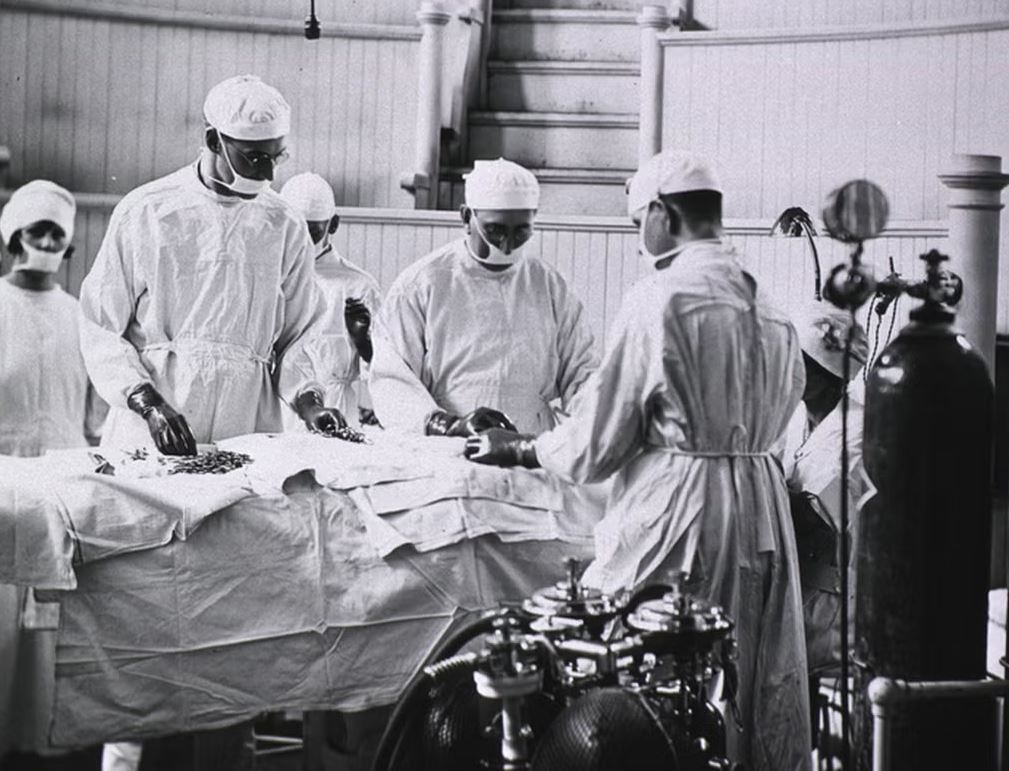
Vapors from ether and chloroform silenced pain long enough for surgeons to work with patience, operations grew safer and more deliberate, and a profession once judged by speed began to be judged by precision and planning.
Antisepsis and the war on invisible enemies
Carbolic acid sprays, clean gowns, and boiled instruments reduced post operative death, the notion that hand and tool carry danger took hold, and sterile technique advanced from skepticism to standard as survival numbers made the argument irresistible.
Germ theory and the naming of culprits
Researchers isolated microbes that cause tuberculosis, cholera, and anthrax, staining methods and pure culture techniques identified agents of disease, and vaccines and antitoxins translated discovery into protection for millions.
Public health and the power of pipes
Cities built sewers, filtered water, inspected milk, and counted births and deaths with new vigor, epidemiologists mapped outbreaks to pumps and neighborhoods, and prevention through infrastructure joined the physician at the center of community health.
Radiography and the gift of transparency
Within months of the discovery of mysterious rays, clinicians could see fractures and foreign bodies, later imaging would display vessels and soft tissue without incision, and diagnosis learned to travel beneath skin without breaking it.
Insulin, vitamins, and the era of targeted therapy
Careful biochemistry turned diabetes from a swift sentence into a chronic condition, vitamins cured scurvy and rickets where diets improved, and nutrition moved from folk wisdom to laboratory guided counsel.
Antibiotics and the age of lifesaving drugs
Mold on a plate revealed a substance that stifles bacteria, chemists refined and expanded the arsenal, and infections that once filled graveyards yielded to tablets and injections, even as resistance began to warn against complacency.
Blood groups, transfusion, and organized emergency care
Classification of blood types made transfusion safe, storage and donation networks followed, and ambulances, triage, and intensive units reshaped survival after injury and surgery across cities and battlefields.
Vaccination programs and the promise of eradication
Coordinated campaigns reached villages and megacities, cold chains protected fragile vials, and the world celebrated the end of smallpox, a proof that global cooperation can remove a microbe from human life when patience and trust persist.
Genetics and the script within cells
Double helical structure explained inheritance, codes linked nucleic acids to proteins, and laboratories learned to sequence, edit, and diagnose with unprecedented precision, raising cures and questions in equal measure.
Imaging that sees function as well as form
Ultrasound, computed tomography, and magnetic resonance shaped three dimensional pictures of organs, positron scans revealed metabolism, and treatment planning in oncology and neurology advanced from guesswork to guided action.
Cardiac breakthroughs and the repair of rhythm
Bypasses rerouted blood around blocked arteries, valves were replaced or repaired, pacemakers steadied faltering beats, and interventional teams learned to thread catheters through vessels to restore flow without opening the chest.
Transplantation and the ethics of new life
Skilled teams moved kidneys, livers, hearts, and lungs from donors to recipients, immunology learned to quiet rejection, and societies debated consent, equity, and access while patients found years of added time through shared generosity.
Cancer care across many fronts
Surgery gained clean margins, radiation targeted tumors with focused beams, chemotherapy attacked cells that divide without order, and new immunotherapies taught the body to recognize threats it once ignored, offering durable remissions for some diseases once deemed inexorable.
Mental health from asylum to community
Psychiatry moved from confinement toward therapy, medication, and social support, psychologists measured behavior and thought with new tools, and stigma began to yield to understanding as public campaigns framed care as a right rather than a shame.
Evidence and the rise of clinical trials
Randomization, blinding, and peer review tested claims against chance and bias, meta analyses pooled small signals into clear guidance, and guidelines translated data into practice while still leaving room for individual judgment.
Primary care and the long arc of prevention
Teams of nurses, physicians, and pharmacists manage blood pressure, diabetes, and asthma, vaccinations and screening catch disease early, and counseling on diet, sleep, and movement aims to extend health span rather than simply to postpone illness.
Digital records and the clinic that remembers
Electronic charts preserve histories, allergies, and images across visits and hospitals, decision support nudges safer dosing, and telemedicine bridges distance for rural patients and for those who cannot easily leave home.
Global health and shared responsibility
Outbreak surveillance, cooperative vaccine development, and training partnerships link nations through common goals, mosquito nets and clean cookstoves save lives alongside new drugs, and the measure of success includes mothers and children who thrive.
Ethics for a powerful century
Consent, privacy, fairness, and access guide research and care, communities ask who benefits when algorithms enter diagnosis, and professionals work to ensure that cures do not widen inequality but instead travel to the bedsides that need them most.
Climate, environment, and the new determinants of health
Heat waves, floods, and air quality shape disease patterns, planners design clinics that endure storms, and medicine broadens its scope to include housing, food security, and green spaces as essential prescriptions for well being.
Resilience through crisis and learning
Pandemics test hospitals and supply chains, clinicians adapt with new protocols, and researchers compress years of development into months while safety remains paramount, leaving behind better tools and stronger networks for the next emergency.
Where the compass points next
Personalized therapies, regenerative tissues, and smarter diagnostics promise care that fits the person rather than the average, yet the lessons of sanitation, vaccination, and equitable access remind us that the strongest medicine begins with simple protections applied well.
The oath renewed at every bedside
The history of medicine is the story of humility learning to listen and of courage learning to act, from herbs warmed by hearth to molecules tailored by code, and its future will remain worthy only if the tools of tomorrow keep faith with the oldest rule, to relieve suffering with skill, honesty, and respect for the life in front of us.