

Light Returned to the Workshop
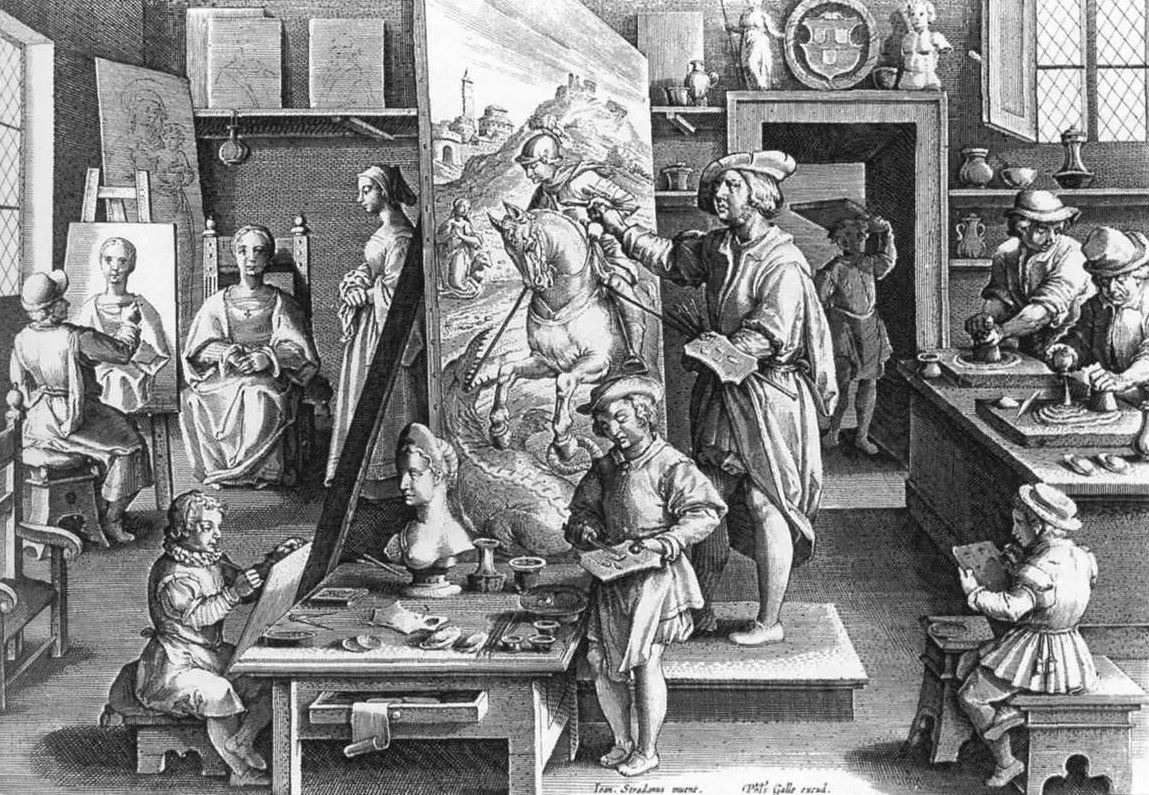
Curiosity, craft, and courage reshaped the world one sketch and one idea at a time
Awakening in streets and studios
Change did not arrive with a trumpet, it seeped into alleys and courtyards where artisans tested pigments and scholars compared notes with merchants who carried news from distant harbors. A mason revised a cornice after studying a Roman ruin, a schoolmaster corrected a line of Latin after finding a better manuscript, a goldsmith watched the sky and drew what he saw, and a painter mixed light into shadow until the figure breathed on the wall. The mood felt new, not because mystery vanished, but because wonder asked for proof and welcomed revision.
The spark of human letters
Humanists sought wisdom in careful reading, and they treated the page as a living conversation that crossed centuries. They argued that language could refine judgment, that eloquence could teach virtue, and that accurate words could repair civic life. In libraries and private studies, they copied old texts with patient hands, they weighed meanings, and they challenged sloppy quotations. The result was a culture that prized clarity and that measured progress by the quality of arguments rather than by the thunder of titles.
Cities that turned rivalry into fuel
Florence competed with Venice, Milan watched both, and courts from Urbino to Ferrara turned patronage into a tournament of taste. Rulers and councils sponsored chapels, palaces, and paintings because prestige shaped trade, and trade paid for beauty that strengthened prestige in return. This cycle rarely rested. A new facade invited a rival dome, a school of philosophy called forth a rival academy, and workshops gained apprentices because citizens wanted to see their names honored in stone and color.
Perspective and the geometry of sight
A simple panel with a grid opened a doorway into space. Artists codified how parallel lines converge at a point, how distances shrink, and how figures sit in believable rooms. Builders adopted these insights to align streets and to set arches that pleased both the eye and the body. Perspective did more than simulate space, it trained viewers to think in systems, to accept that a rule can produce endless variety, and to respect the diagram as a guide for imagination.
The painter as natural philosopher
Observation turned into method when painters sketched bones, plants, clouds, and machines. Brushes tested hypotheses about reflection and refraction. Chiaroscuro emerged as a way to model form, but it also became a way to analyze how light behaves in air and on skin. Workshops hummed like small laboratories where pigments were ground, binders were measured, and failure was recorded so it could be avoided next time. Beauty and inquiry walked together, each urging the other forward.
Print shops and the speed of ideas
Movable type multiplied thought. A scholar who once wrote a treatise for twenty readers now reached thousands in a season. Printers became editors, entrepreneurs, and diplomats who balanced the desires of authors, the opinions of censors, and the taste of buyers. The book turned into a portable city of learning. Margins filled with notes. Indexes guided hands to specific claims. Errata sheets taught humility by admitting error while inviting correction.
Patrons, contracts, and the price of marble
Behind every fresco stood a contract that named deadlines, pigments, wages, and penalties. Behind every statue stood quarry rights, mule teams, and harbor fees. The economy of the arts connected miners, bankers, sailors, and cooks. When a patron delayed payment, an entire chain felt the pause. When a banker advanced credit, a square gained a new fountain and a troupe of carvers found steady bread. A culture of receipts and ledgers supported a culture of angels and saints.
Architects who listened to proportions
Treatises on symmetry and harmony shaped walls and windows. Circles and squares guided plans, while columns returned from ancient patios to support modern loggias. Buildings invited the public to move with ease, to breathe in shaded cloisters, and to admire how sunlight traced an arc across vaults designed for both endurance and delight. Mathematics did not stifle invention, it steadied it, like a rhythm section that lets the melody wander without losing the beat.
Engines, wheels, and the theater of invention
Mechanics sketched gears that lifted weights with small input, stage crews designed flying machines for civic pageants, and military engineers proposed bridges that could be raised and stored by small teams. Not every device worked, but the habit of sketching and testing produced a climate where failure became a tutor rather than a judge. Cities rewarded clever solutions to floods, sieges, and transport, and this demand kept workshops busy long after festivals ended.
Maps that taught confidence
Cartographers turned coastlines into legible curves and turned stars into reference points that sailors could trust. Portolan charts recorded winds and hazards with practical candor. Globes appeared in studies, reminding readers that curiosity had a shape and a scale. Diplomats traveled with atlases, merchants calculated routes with rulers, and schoolboys learned that the world could be pictured in ways that helped one reach a destination with fewer surprises.
Music and the arithmetic of delight
Composers balanced polyphony with clarity so that voices could weave without knotting into confusion. Courts hired choirs that understood both devotion and pleasure. Inventors improved instruments with better strings and more accurate frets. Notes moved across the page like precise steps in a dance, and listeners learned to hear structure as joy. The same appetite for order that shaped domes shaped motets and masses.
Medicine between tradition and experiment
Universities still taught authorities from the past, yet surgeons and physicians added case histories that confronted theory with experience. Anatomists studied the body directly, then argued for changes in diagrams that had stood unchallenged for centuries. Apothecaries cataloged plants with careful drawings and measured dosages with scales rather than with memory. Health remained precarious, yet care improved because observation gained status equal to reverence.
Women who shaped salons and studios
Patronesses assembled circles that discussed poetry, law, and theology with polite daring. Some women managed printing houses and signed contracts that brought authors to presses with fair terms. Others painted and wrote with ambition that surprised their critics. Letters reveal a web of mentorship and practical advice that moved across borders, as scholars sought one another’s judgment without demanding permission to think.
Law, peace, and the art of negotiation
City states preferred treaties to ruin, so ambassadors studied rhetoric and precedent. Legal humanism urged courts to read texts with care, to weigh intention as well as letter, and to avoid rigid formulas that ignored circumstance. Codes were recopied with attention to clarity. Notaries gained honor because society learned that prosperity depends on trust, and trust depends on records that anyone can audit.
Greek and Hebrew in the schools
Language study moved beyond grammar drills into living engagement with ancient authors. Teachers insisted on precise translation and on arguments that could survive cross examination. Students compared manuscripts, corrected errors, and produced editions that invited the next generation to aim still higher. The result was a scholarship that prized honesty and that accepted the slow pace of improvement as a virtue.
From plague to purpose
Memories of loss did not darken ambition, they deepened it. Communities honored the dead with hospitals, endowments, and chapels, then they set about repairing streets and reopening fairs. Survivors invested in schools because they wanted a future that could learn from hardship. Pain became a teacher that urged cities to diversify trade, to store grain more wisely, and to train physicians who could read symptoms without superstition.
Color, oil, and the patience of layers
Painters learned to glaze thin coats that altered light in subtle ways. They planned compositions like architects and wrote notes like chemists. Portraits recorded the pride of merchants and the reserve of scholars. Altarpieces offered theological complexity in images that invited quiet study. The brush served both scholarship and devotion, and patrons recognized that a well made picture can teach as well as adorn.
Letters that traveled faster than roads
Humanist correspondence created a republic of minds that met on paper. A letter carried a problem, a reply carried an objection, a third letter synthesized both. This tempo kept scholars honest because they knew their peers would question every claim. Postal systems grew more reliable, inns served as relay points, and couriers learned which packets required speed and which required secrecy. The pen built a public that valued reason.
Guilds that protected craft and opened doors
Membership gave workshops stability, set wages, and enforced standards. At the same time, gifted outsiders could rise if they proved skill. Journeymen carried techniques from town to town, which spread innovation without central control. Festivals displayed masterworks to a broad audience, and competitions selected monumental commissions through clear rules. Quality became visible and therefore became imitable, which raised the floor and lifted the ceiling for craft.
Stagecraft and the rebirth of civic play
Public squares turned into theaters that blended scripture, myth, and news. Writers shaped dialogue with wit and moral bite, while carpenters designed sets that shifted scenes with graceful speed. Audiences learned to read complex emotion in gestures and pauses. The habit of performance trained citizens to consider multiple perspectives, a practice that also served courts, councils, and classrooms.
Gardens as diagrams of hope
Hedges traced geometry on the ground so that walkers could experience proportion through movement. Fountains cooled courtyards and reminded visitors that water management is both utility and art. Physicians recommended herbs grown in orderly beds, and poets found metaphors in the balance between wild growth and careful pruning. The garden taught a gentle politics, care for the common good through measured attention.
Banks that turned trust into marble
Families that mastered exchange across currencies financed art, libraries, hospitals, and convents. Their ledgers balanced risk with prudence. Their agents learned which captains kept schedules and which did not. Credit allowed long projects to continue through winter and drought. Civic beauty did not float above economics, it grew from it, like a dome that rests on foundations others rarely see.
Bridges between worlds
Translators carried knowledge from Arabic commentaries and Byzantine libraries into Latin classrooms. The fall of cities sent scholars west with trunks of manuscripts and heads full of memory. Sailors returned with instruments and maps that challenged old assumptions. Artists studied textiles from the East to learn new patterns and colors. Every border became a laboratory where styles mixed and tools improved.
Education that trained character and skill
Schools taught grammar, rhetoric, history, poetry, and moral philosophy with the goal of producing citizens who could speak well and act wisely. Apprenticeships paired young people with masters who taught both technique and professional ethics. The aim was not polish without purpose, it was judgment that could guide action in markets, courts, and councils. Learning became a public good that paid dividends across a lifetime.
Science that trusted instruments and eyes
Astronomers charted planets with greater accuracy, anatomists corrected diagrams by cutting and drawing, and natural philosophers described minerals and animals with patient detail. The habit of recording measurements spread from workshops into laboratories. Tables replaced legends, and experiments invited repetition by strangers. Knowledge shifted from authority to demonstration, and that shift prepared the ground for later revolutions in thought.
Memory housed in new temples of books
Libraries reorganized catalogs so that readers could find texts without guesswork. Collectors funded bindings that preserved fragile paper. Scholars wrote prefaces that explained how to use a book, how to verify sources, and how to avoid common errors. Institutions opened reading rooms where strangers consulted the same shelf and then debated what they found. The city that reads together learns to trust evidence over rumor.
Faith, beauty, and the examined soul
The search for wisdom did not end devotion, it refined it. Preachers learned from rhetoric, painters learned from scripture, and composers set sacred texts with care for the ear and the heart. Reformers called for honesty in worship and for humility in leadership. Spiritual writers described the inner life with a candor that resonated beyond confessional lines. The period taught that truth seeks both light and love.
The path that continues beyond the square
What began in workshops and studies grew into a habit of mind that still shapes classrooms, studios, courts, and laboratories. Curiosity asks a question, craft builds a model, courage releases the result to public judgment, and then the cycle repeats with better tools and better notes. The legacy is not a museum of trophies, it is a method for living that prizes careful seeing, honest speaking, and generous collaboration. In that spirit, light keeps returning to the workshop, and from there it travels outward into every street.