

When Maps Learned to Breathe
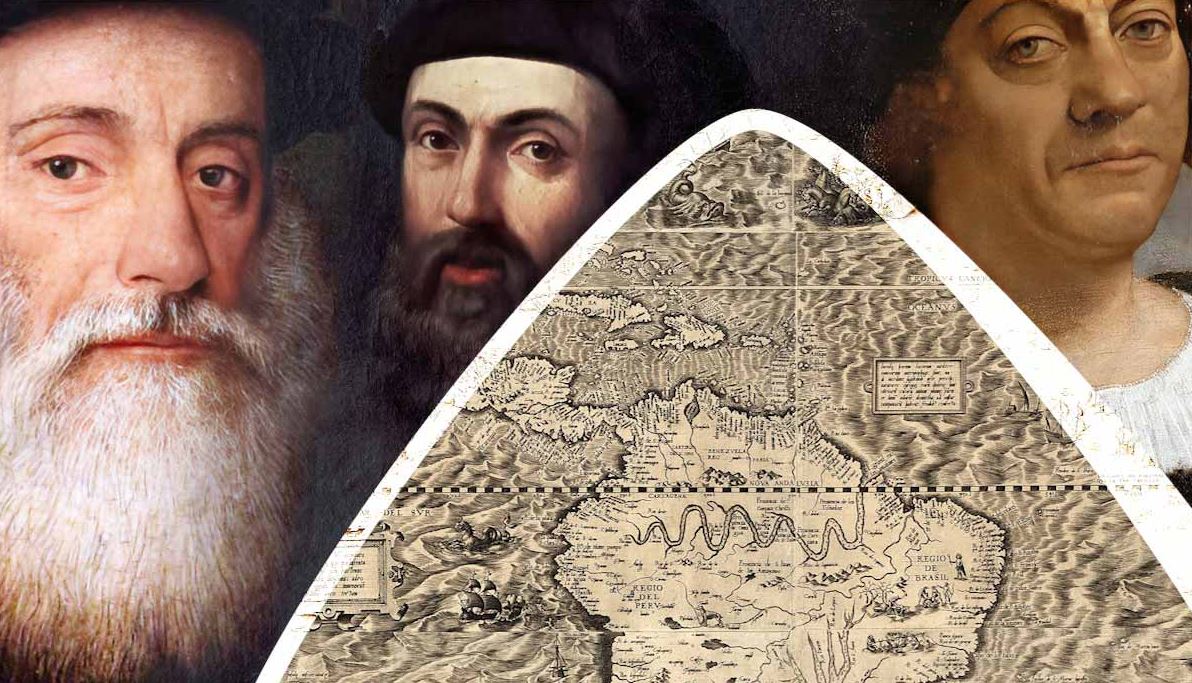
Curiosity, ambition, and saltwater reshaped the edges of the known world
Horizons before compasses
Long before ships carried sails across entire oceans, curiosity rode on rivers, caravans, and coasts. Early travelers followed stars by instinct and landmarks by memory, charting paths that stitched continents through trade and story. The ancient Phoenicians reached beyond familiar shores, Egyptians traced the Red Sea, and Chinese mariners mapped the South China Sea with precision born of repetition. Each expedition was both practical and poetic, an attempt to feed hunger and imagination at once. The world was smaller in name only, for minds were already stretching toward its unseen corners.
Motives that sailed faster than ships
The great voyages that followed were not born from idle wonder alone. Monarchs and merchants shared a hunger for spice, silk, and gold, commodities that carried scent and prestige across empires. Religion played its part, offering divine justification for territorial reach and conversion. Prestige and rivalry quickened ambition, turning exploration into a contest of endurance and empire. The compass needle, simple yet miraculous, became the hand that pointed kings toward destiny. Curiosity served commerce, and faith followed behind, writing prayers on the wind.
Portugal and the logic of the coast
Under the patient vision of Prince Henry, Portuguese mariners traced the western edge of Africa, building forts, exchanging goods, and recording each cape with growing confidence. Their caravels, light and quick, defied old fears of the open sea. Bartolomeu Dias proved the Cape of Good Hope could be rounded, and Vasco da Gama later reached India, connecting Lisbon to Calicut through a chain of storms and negotiations. The sea route to Asia rewired the global economy, shifting wealth toward the Atlantic and igniting rivalries that would shape centuries of competition.
Spain and the quest for the setting sun
While Portugal turned eastward, Spain looked west. Christopher Columbus, armed with maps that misjudged distance but not determination, crossed an ocean he barely understood and met a world Europe had forgotten to imagine. His landfalls on Caribbean islands began exchanges of plants, animals, ideas, and disease that transformed both hemispheres. Conquistadors followed, blending conquest with exploration, driven by promises of wealth and crowns. Yet beneath their ambition, the voyages revealed the planet’s vast continuity, a truth larger than any single empire could hold.
Encounters written in both wonder and wound
The meeting of continents was neither pure discovery nor simple conquest. For indigenous peoples across the Americas, Africa, and Asia, contact brought upheaval and adaptation in equal measure. Languages collided, crops migrated, and diseases crossed invisible frontiers. Maize reached Europe, horses returned to America, and silver from the Andes fueled European industry. The Age of Exploration created a web of exchange that stitched the planet together while tearing old fabrics apart. Its legacy is both abundance and amnesia, both curiosity and cost.
The cartographer’s quiet revolution
Maps, once filled with dragons and divine warnings, began to reflect geometry instead of myth. Cartographers gathered sailors’ logs, astronomers measured latitudes, and mathematicians refined projection methods that balanced accuracy with beauty. Gerardus Mercator’s projection, drawn in the sixteenth century, turned navigation into a science of lines and distances. Every corrected coastline shrank ignorance and expanded ambition. The blank spaces that once haunted explorers slowly disappeared, replaced by coordinates and confidence, yet every completed map also revealed how much remained unmeasured.
Instruments that taught the stars to speak
The sextant, astrolabe, and hourglass became companions of navigation, translating celestial movement into earthly direction. Mariners learned to read the heavens with discipline rather than prayer. Astronomy and geometry joined hands to create routes that could be retraced rather than rediscovered. The study of tides, winds, and currents turned experience into expertise. Navigation evolved from art into applied science, allowing voyages that no longer depended on luck. Precision replaced myth, yet awe remained, for even the most accurate chart still began with wonder.
The northern winds and the search for shortcuts
England, France, and the Netherlands entered the scene with ambition shaped by late arrival. They sought northwest or northeast passages to Asia, believing cold seas could conceal profit. Sailors like Henry Hudson and Martin Frobisher pushed through ice and mutiny to reach imagined routes. Their failures added detail to geography, filling maps with bays, rivers, and legends of frozen empires. The cold frontier remained unconquered, yet each expedition left behind journals that taught later generations how persistence turns even loss into discovery.
The Pacific and the art of endurance
Ferdinand Magellan’s fleet, sailing under the Spanish flag, achieved the first circumnavigation of the globe though he himself never returned. His voyage proved the oceans were one body of water and that patience could bridge continents. Centuries later, explorers like James Cook redrew the Pacific with precision and respect for observation. Cook’s expeditions combined science with exploration, mapping coasts, collecting plants, and recording languages. The Pacific, once an expanse of rumor, became a living atlas of islands, reefs, and routes that linked Asia, Oceania, and the Americas.
Empires built on currents
As routes solidified, ports turned into colonies and stations became cities. Manila connected silver from Mexico to silk from China, while Goa anchored Portuguese power in India. Dutch merchants founded Batavia, French traders ruled from Pondicherry, and English companies carved monopolies along the coasts of Africa and Asia. Commerce became empire in slow increments, and exploration turned into administration. The same winds that carried adventurers now bore governors and accountants. The age of discovery gave birth to the age of domination, and geography became a tool of governance.
Science on deck and reason in the hold
Exploration gradually moved from conquest to curiosity. Expeditions in the seventeenth and eighteenth centuries carried astronomers, botanists, and naturalists who cataloged the world with a different hunger. Instruments measured magnetism, tides, and temperature, while specimens filled cabinets of curiosity in European capitals. The voyages of La Condamine, Bougainville, and Cook linked discovery with data. Navigation, once a gamble, became an experiment in applied reason. Exploration joined the Enlightenment, turning oceans into open-air laboratories.
Voices from the margins of the map
Every voyage depended on local knowledge, though chronicles often buried those names beneath the exploits of captains. Polynesian navigators taught Europeans how to read swells and birds. African pilots guided ships along coasts that looked identical to strangers. Indigenous interpreters and traders mediated exchanges that might otherwise have ended in violence. The silent partners of exploration—guides, enslaved laborers, translators—held together the fragile bridge between curiosity and survival. Their knowledge, once dismissed, is now recognized as the true backbone of global navigation.
Art, myth, and the storytelling of seas
Exploration reshaped not only maps but imaginations. Painters captured storm and sunlight, writers filled journals with accounts that mingled truth and theater. Shakespeare’s tempests and Milton’s vast firmaments echoed the spirit of discovery that haunted Europe’s dreams. Travelogues turned mariners into heroes, explorers into prophets of progress. Yet within these narratives lay unease, for every horizon conquered reminded humanity of its own smallness. The age that opened worlds also confronted the infinite, teaching that knowledge expands faster than control.
The cost of the compass
For every triumph recorded in gilded script, there were losses buried in silence. Sailors vanished into storms, native societies collapsed under disease, ecosystems shifted under new crops and animals. The Columbian Exchange enriched diets but altered landscapes. Wealth piled in ports but bled from colonies. Exploration promised connection, yet often delivered inequality. The compass, a symbol of orientation, pointed in many directions at once, some leading to enlightenment, others to exploitation. The sea gave, but it also took, indifferent to motive.
The reshaping of global imagination
By the eighteenth century, the world had become measurable yet still mysterious. Atlases compiled knowledge into visual order, universities taught geography as an academic pursuit, and merchants planned trade routes with predictable accuracy. Yet the romantic spirit of discovery lingered. Poets and philosophers saw in exploration a metaphor for the human condition, an endless reaching toward understanding. The once blank ocean had become a mirror reflecting human ambition, pride, and vulnerability in equal measure.
Navigation of identity and empire
As colonies matured, explorers turned into administrators, and maps became instruments of claim. Boundaries drawn in distant offices ignored landscapes and cultures, planting seeds for future conflicts. Yet the exchange of language, art, and food created hybrid identities that defied borders. Exploration blurred the line between discovery and displacement. The globe had become interconnected, but unity came tangled in hierarchy. The dream of universal knowledge coexisted uneasily with the reality of selective power.
Instruments of the next horizon
Steam and steel replaced wind and canvas, signaling the end of one era and the start of another. The nineteenth century saw explorers move inland, tracing rivers through Africa, mapping mountains in Asia, and charting polar caps. The spirit of navigation survived in new forms, now tied to railways, telegraphs, and science. The same desire that once sent caravels across the Atlantic now sent balloons and submarines into unknown elements. The geography of mystery shifted, but its essence endured, reminding humanity that discovery is a habit, not a moment.
Memory, museum, and mythmaking
Modern nations curate the age of exploration through museums, textbooks, and films that alternately celebrate and critique. Shipwrecks become time capsules, journals become archives of ambition and doubt. The rediscovery of indigenous narratives restores balance to what was once a one-sided story. The artifacts of exploration, from globes to sextants, stand as witnesses to a time when the world grew larger in the mind even as it became smaller in fact. Memory, like the tide, returns with new interpretations each generation.
Echoes in today’s explorers
In the twenty-first century, exploration has shifted from oceans to orbits. Space agencies chart planets with the same blend of courage and competition that once drove sailors beyond known coasts. Deep-sea submarines probe trenches darker than night, and probes journey past the edge of the solar system. The technologies differ, but the motives remain familiar—curiosity, survival, and wonder. Humanity still seeks to answer the same old question that moved Magellan and Zheng He alike: what lies beyond the horizon?
The enduring wind of curiosity
The Age of Exploration never truly ended, it changed its vessel. Every time a telescope focuses on a distant star or a submersible descends into the abyss, it repeats an ancient gesture, the turning of the eye toward the unknown. The maps may be complete, but mystery renews itself with every generation. The courage to question, to voyage, and to learn remains the truest inheritance of those who first trusted wood and wind to carry them across an uncharted world.